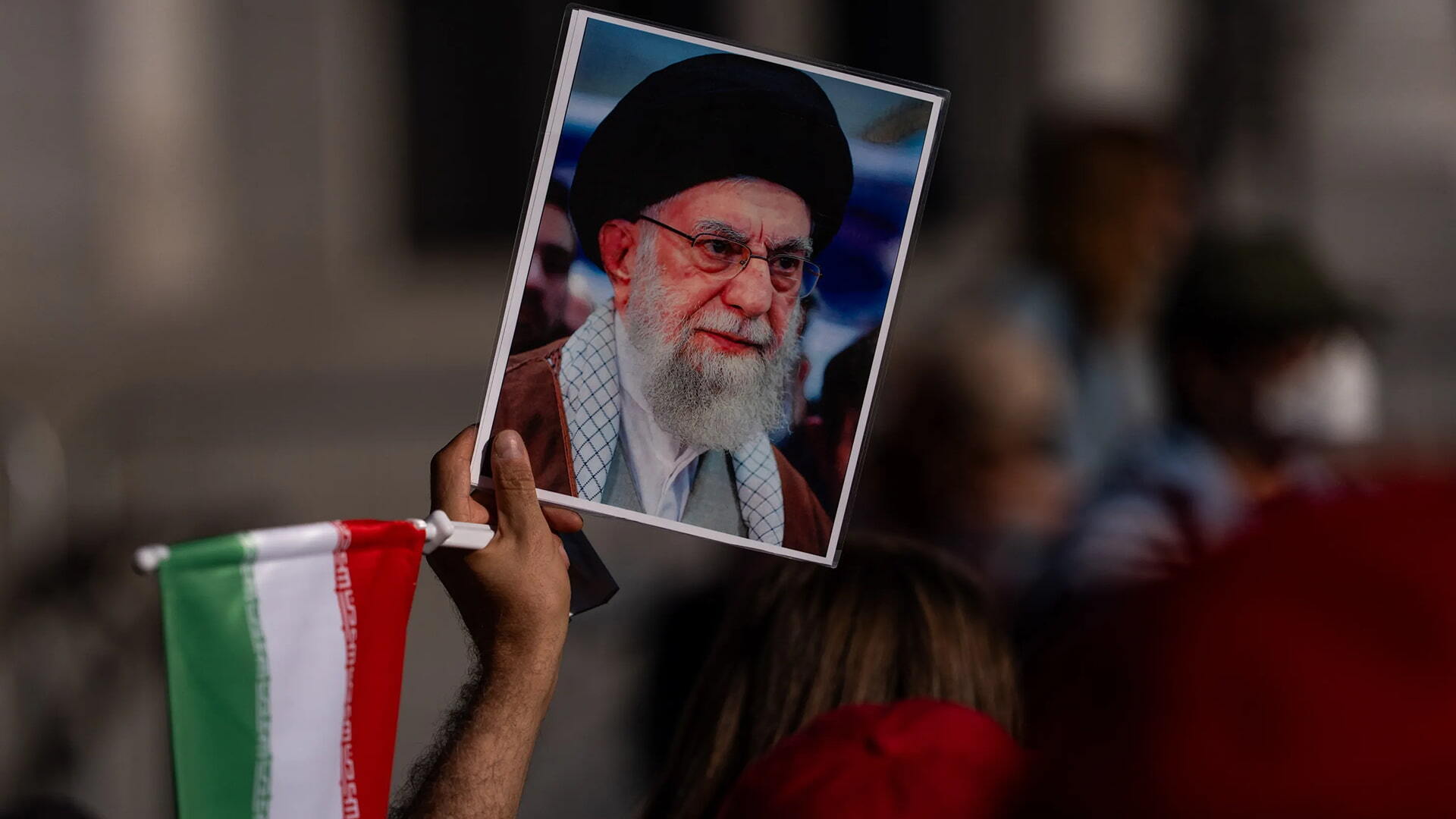
Israel attacks Iran, assassinates Iranian Supreme Leader Ali Khamenei, confirmed the news openly and mentions upcoming plans towards the state. Iran initially did not confirm the news and stated that the leader is alive and well. Later, Iran officially confirmed that its Supreme Leader, Ayatollah Ali Khamenei, is dead.
According to Iranian state media, he was killed in joint US-Israeli airstrikes that began early Saturday. After earlier confusion and denial, the confirmation came to the world on Sunday, which shook the nation. Afterward, an emotional layer is set amongst his admirers and the nation, and protests seem to be beginning. The state of Iran has also declared a 40-day mourning period.
This confrontation is not just another military strike this time; this is the killing of the most powerful person in Iran.
Iranian Supreme Leader Ali Khamenei was not a president. He was not a prime minister. As Supreme Leader since 1989, he held ultimate authority over:
- The government
- The military
- The judiciary
- The Revolutionary Guard
- Major foreign policy decisions
Nonetheless, in the political system of Iran, the Supreme Leader is above elected officials. Removing him is not like changing a cabinet minister. It is removing the core decision-maker of the state, and clearly, it is the reason for such a tremendous reaction from people. Moreover, people’s sentiments are also attached.
Iranian Supreme Leader Ali Khamenei succeeded Ayatollah Ruhollah Khomeini, who led the 1979 revolution of Iran. For nearly four decades, Khamenei shaped Iran’s direction internally and internationally.
His death changes the power structure overnight, and the local and international media are all talking about this matter. Over the past few days, the news of Israel attacks Iran has been seen circulating massively, and so have people’s reactions.
What the US and Israel Are Saying?
US President Donald Trump publicly claimed responsibility, saying advanced intelligence and tracking systems made the strike possible. He framed it as a major opportunity for the Iranian people to “take back their country.”
Israeli Prime Minister Benjamin Netanyahu also claimed Israel attacks Iran, and there were clear signs Iranian Supreme Leader Ali Khamenei had been killed, and said several senior figures in Iran’s leadership had been eliminated.
Both leaders are presenting the strike as a strategic success, which seems like a preplanned act.
What Happens Inside Iran Now?
Iranian Supreme Leader Ali Khamenei certainly has shifted Iran’s trajectory. Iran has long planned for the possibility that Khamenei could be killed, especially in wartime. Analysts suggest a leadership council could temporarily run the country. There may already have been contingency plans in motion.
Still, even with planning, removing the central authority figure creates uncertainty because power transitions in stable systems can be managed quietly. Power transitions during war are unpredictable. Right now, more than who replaces him, the question is whether the transition increases stability or hardens the conflict, and what this all could result in.
The Israel attacks Iran conflict is already expanding, and Iran is at its lowest of all time.
Furthermore, the strikes that killed Khamenei were not limited to operations. According to Iranian reports, attacks targeted 24 provinces and killed at least 201 people. Israeli strikes reportedly hit schools in southern Iran, with high civilian casualties reported.
In this conflict, Iran also strikes US bases in neighboring countries.
The Revolutionary Guard says multiple waves of retaliatory strikes are underway. Air defence systems were activated in countries hosting US military bases, including Kuwait, Qatar, the UAE, and Bahrain.
Seeing this situation, it is clear that the conflict is no longer contained between the two borders. It has become a regional matter, and the whole region is on alert.
What has been the International Reaction?
The United Nations Secretary-General called for immediate de-escalation, warning that military action in such a volatile region could trigger events no one can control.
- Iran’s UN ambassador called the strikes an act of aggression and a war crime.
- The US ambassador defended the operation as lawful and framed it around preventing Iran from acquiring nuclear weapons.
- Moreover, China and Russia both expressed concern and condemned the strikes.
In short, the world is divided, and whatever is going on is clearly not going in any good direction.
However, the real risk now is the death of a long-time leader during an active conflict, which rarely simplifies things.
It can harden positions, strengthen hardliners, reduce room for negotiation, and increase retaliation. Simply, peace is questioned, and so is the life of innocent people.
Furthermore. History can be referenced here, which shows that external attacks often create internal solidarity, even among critics of the government. That dynamic cannot be ignored.
Israel attacks Iran: Understanding the attack and its profound impact
The killing of a country’s top leader in an airstrike is the kind of event that rarely brings relief to ordinary people. On the ground, it usually means fear, anger, uncertainty, and the risk of more violence.
Deliberately killing the top political and religious leader of another country is an extreme act. It is not a small tactical strike. It is a decision that almost guarantees escalation and initiates the chaos and instability.
Stripping away politics for a second, when powerful states decide that assassinating leaders is acceptable policy, it lowers the global threshold for similar actions. It normalises escalation at the highest level. And that makes the world more unstable, not less.
So the real issue is not just whether it was justified in someone’s view. The real issue is what triggers the next retaliation, regional war, civilian suffering, and long-term instability, which are far more horrible things.
And in the Middle East, killing a leader has usually made things worse, not better.
Why Assassinations Don’t Solve the Real Problem?
There is a military idea called “decapitation.” The logic is simple: cut off the head, and the body collapses.
When Saddam Hussein was removed in Iraq, his regime ended. But what followed was not stability. It was chaos. And there are clearly more instances. The pattern is not complicated: remove one leader, and someone else steps in. Often, someone is more radical. Or someone with less patience for negotiation.
In the long-term the people suffer, the nation gets disturbed, and there is instability for years.
Nonetheless, Iranian Supreme Leader Ali Khamenei was 86 years old. He was already dealing with health issues. Iran had reportedly been planning for succession.
So this was not a case of removing a young, rising strongman at the peak of power. Furthermore, there is the risk of collapse. There is another possibility that is far more dangerous. If outside pressure pushes Iran toward internal collapse, what fills the vacuum?
Iran is larger, more complex, and strategically positioned. A security vacuum there would not stay contained. It would affect energy markets, neighbouring states, and regional alliances.
Nonetheless, amongst all the headlines and political instability, the core question is;
Does killing a leader solve the conflict?
In the Middle East, the consistent answer has been no. It rarely removes the deeper grievances, rivalries, and ideological battles driving the conflict. What usually happens next is a surge of emotion, calls for revenge, and less room for compromise.
Over time, instability spreads in undesirable ways.
The removal of one man, Iranian Supreme Leader Ali Khamenei, even a powerful one, does not erase networks, institutions, loyalists, or ideas, even if they may look weaker.