
Every task a procrastinator postpones reveals a deeper struggle with emotional regulation and self‑control, illustrating why understanding procrastination is essential to reclaiming our productivity.
What is procrastination? A word often heard and talked about while discussing the matter of people wasting time on social media. However, this is far beyond just wasting time.
Almost everyone “puts things off” occasionally; thus, procrastination is normal, as it happens, and we can’t say this is an alien term. Nevertheless, stubborn procrastination can backfire. “Self-defeating behavior pattern marked by short-term benefits and long-term costs” is how experts describe it.
The psyche of a Procrastinator: Why do people procrastinate?

A procrastinator is not just delaying tasks or wasting time; it encompasses more than just putting off chores or having poor time management. Fundamentally, it shows a failure to successfully control emotions. To feel better right away, many procrastinators postpone responsible tasks that make them feel bad, such as boredom, worry, fear of failing, or self-doubt.
Delaying the activity provides this temporary break, but it doesn’t address the underlying emotional distress. Ironically, this avoidance frequently results in a self-reinforcing cycle of increased stress, guilt, and worry in the future. Research indicates a substantial correlation between procrastination and a lack of emotion regulation skills, demonstrating that those who find it difficult to control and tolerate unpleasant emotional states are far more inclined to put off crucial tasks, even when they are aware of the long-term consequences.
Stated differently, we postpone doing something now to feel better right away (the short-term benefit), even though doing so will make things more difficult later (the long-term cost).
There are severe consequences: long-term procrastinators typically experience higher levels of stress, lower self-esteem, and worse health outcomes. In severe situations, it is connected to despair, anxiety, and even below-normal academic and professional results. Crucially, procrastination is a complicated psychological issue rather than only being lazy or self-centered.
Behavioral, emotional, and cognitive aspects: Fundamentally, procrastination is a conflict between our emotions and our thoughts. Cognitively, procrastinators frequently miscalculate the value of time and motivations. Temporal ignoring is when we undervalue long-term rewards and underestimate how long things take. Our brain “discounts” the value of a goal when it is far away, such as a report or exam, making leisure or simple chores seem more appealing. Avoiding unpleasant emotions is a common emotional reason for procrastinating. We put off boring or challenging tasks to feel better because they can cause dread, worry, or self-doubt.
Furthermore, Procrastinators tend to show delayed and distracted behaviors. We set increasingly late start times and permit few distractions (such as checking social media) to disrupt our work. For instance, the “just one more episode” tactic at night causes procrastination before bed. These behaviors reinforce one another. Procrastination is more common in people with executive-function deficiencies (impulsivity, poor planning, and lack of self-control).
What is procrastination: Key Theories of Procrastination

Psychology’s focus has always been on understanding procrastination. Three main ideas explain why humans put off crucial tasks:
Temporal Discounting: According to this theory, which has its roots in psychology and economics, people undervalue rewards that will come later. A task’s value seems diminished when the reward—a good grade, recognition, etc.—is far off. As a result, rather than beginning work, a person chooses instant comfort (cleaning, TV, or socializing). This was supported by a recent large study, which found that people who significantly underestimated future rewards put off a real long-term activity more.
Put another way, the more you prioritize immediate gratification (while ignoring the long-term advantages), the more likely you are to put things off. People who are impulsive about time, favoring the “now” over the “later,” are more likely to procrastinate, according to this notion, which is supported by research.
Moreover, self-control is viewed as a limited resource in the Ego Depletion (Limited Willpower) concept. Having to fight temptations all day wears down our “willpower muscle.” According to studies, people are more prone to give in to simpler but ineffective options, such as putting off work or bedtime, when their self-control is worn down (by avoiding numerous temptations or completing mentally difficult tasks).
Someone who has fought stress or distractions for hours could feel too exhausted to take on a new task at night. Ego depletion has been linked to anxiety and procrastination, according to research; students who experience high levels of worry also report higher levels of ego depletion, which is a predictor of procrastination. Put, you postpone difficult chores since your capacity to persevere through them diminishes with your mental energy.
Executive Function Deficits: The brain’s ability to plan, organize, focus, and block out distractions is known as executive functions. One could consider procrastination a failing of the executive function. Individuals with poor executive control frequently struggle with decision-making, impulse control, and task division. Chronic procrastinators do, in fact, frequently characterize themselves as having bad time management, a lack of planning, or trouble focusing, according to studies.
Nonetheless, procrastination is caused by a combination of executive dysfunction, a lack of self-control (ego depletion), and a short-term emphasis (temporal discounting). All of these factors—boredom, worry, or perfectionism—interact with our emotions to make delaying seem alluring.
Procrastination is real and quantifiable, according to science. It comes from the way we perceive time and control our emotions. Although it is connected to brain-based self-control mechanisms, it is controllable with the correct resources.
Practical Strategies: How to overcome procrastination?
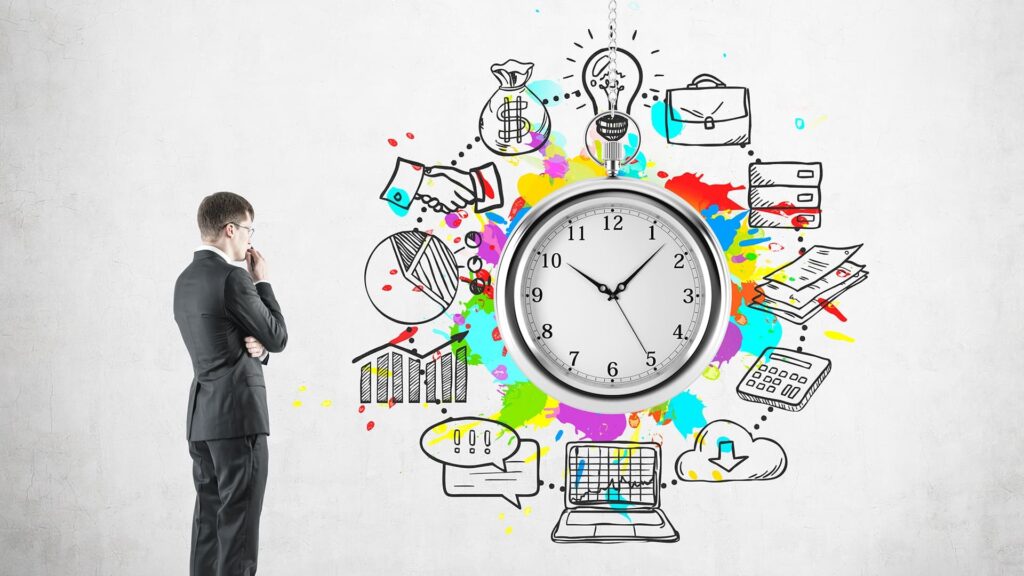
Proactive action, or taking initiative right away, is the opposite of procrastination. A proactive individual starts projects early and frequently foresees problems before they emerge, whereas a procrastinator puts things off. This way of thinking increases momentum, lowers stress, and gives one a sense of confidence and control over their everyday life.
Fortunately, there are numerous tried-and-true methods for overcoming procrastination. You can become unstuck by combining emotional work with useful tools. Here are some important strategies:
Divide tasks into manageable chunks. Big goals can be too much to handle. Create a thorough strategy by outlining each step required to complete the assignment, and then rank them. According to one assistant, “do something every day on your project; even if it is only for 5 minutes,” and “write down a list of the tasks that you must do to complete your project and prioritize them.” For instance, begin with “outline report headings,” then “draft intro paragraph,” etc., rather than “write report.” This transforms intangible projects into real tasks.
Set aside particular times for work. To schedule work hours, use a planner or calendar. Choose a time and set a reminder rather than making ambiguous promises like “I’ll do it tomorrow.” Even five or ten minutes before you feel ready, try to get started. Linking your task to an existing habit is a useful tip. For instance, “I’ll write for fifteen minutes at my desk after lunch.” To automate start-up behavior, researchers advise utilizing implementation intentions (“If X, then I will do Y”). To help pupils develop routine, a university program recommended that they “schedule a specific work time” and even “work on [an avoided task] for 45 minutes before [a regular activity]”.
Apply the Pomodoro Method. Take a 5-minute rest after working hard for 25 minutes, for example; after two to four cycles, take a longer break of 15 to 30 minutes. This regular rhythm, which is easily accessible through timers or phone apps, encourages continuous concentration and prevents burnout. Additionally, it establishes a distinct start/stop signal, which lessens the task’s scary nature because you just need to concentrate for “just 25 minutes,” not forever.
Establish deadlines and incentives. According to Parkinson’s Law, “work expands to fill the time allotted.” Set external duties and give yourself earlier deadlines than necessary to counteract this. For example, schedule the completion of the draft before a friend’s visit. When you reach milestones, commit to rewarding yourself. “Decide on a specific reward for success (and/or punishment for failure) and follow through,” is one of the suggestions from students. After completing a portion, rewards could include a favorite food, a walk, or a coffee break. This prevents temporal discounting by linking tasks to instantaneous positive feedback.
Put an end to distractions. Establish a setting that is favorable to concentration. Put your phone on silent, tidy up your workplace, and close any tabs that aren’t important. “Eliminate distractions – every time you get distracted, you lose focus and time” is the advice given by Bowdoin College to students. For example, shut off your phone or browser. If necessary, use apps that block websites. Choose a place to work where you won’t be disturbed, such as a quiet room or library. Making minor adjustments, such as putting your phone in a different room, can greatly lessen the temptation to get distracted.
Increase your self-confidence and motivation. Link your tasks to meaning and personal objectives. Remember why the task is important (e.g., personal values, career progress). Visualizing success is one strategy; picture how happy you’ll feel when it’s finished. Change “I hate doing this” to “I’m just going to start this now” as an example of positive self-talk. Celebrate little victories right away. Even a little celebration, such as a thumbs-up or five deep breaths, can help to reinforce improvement. Try the “two-minute rule” if you have trouble getting started: dedicate yourself to working for only two minutes. Once you start, momentum usually takes you farther.
Employ Accountability Partners. Discuss your objective with someone and follow up with them. Commit: “We’ll meet Monday to review our progress,” for instance. Writing partners or study groups might help you stay truthful. According to self-regulation research, last-minute rushes can be significantly decreased by external accountability, such as scheduled meetings. “Make a contract with a friend or teacher to get a specific task done,”. Social pressure to follow through is positive when you know that someone else is depending on you.

Implement cognitive-behavioral strategies. Irrational beliefs, such as “I’m a failure if I don’t finish it perfectly,” can occasionally be linked to procrastination. Ask for evidence to refute these ideas. “What’s the worst that could happen if I start now?” ask yourself. Instead of saying, “I’ll be fired if I don’t finish today,” positively reframe duties, such as, “It’s good practice.”
By concentrating on solutions, you can overcome mental obstacles. One cognitive behavioral therapy exercise is called a “behavioral chain analysis,” which involves writing down every detail of a typical delay—including the trigger, thoughts, feelings, and actions—and searching for areas that could use improvement. Avoidance can be lessened in treatment by using strategies like imaginal exposure, which involves mentally going through the task and observing anxiety without taking any action.
Furthermore, Clinical trials show significant decreases in procrastination following CBT-based instruction, providing strong evidence that CBT for procrastination is effective.
Keep your mind and body healthy. Poor nutrition, sleep deprivation, and ongoing stress all undermine motivation. Be sure to eat frequently, take pauses, and get adequate sleep and exercise. Weary brains want to put things off. Studies on nighttime procrastination reveal that people are more prone to put off going to bed after a demanding day since their self-control is weaker. You may refuel your energy to take on responsibilities instead of avoiding them by maintaining a normal sleep schedule, going for brief walks, and eating wholesome snacks.
You can be reminded to work on your goals every day by using habit trackers. Apps can help by offering structure and feedback, but they are not magic. Set clear guidelines for yourself when utilizing them to avoid using them as fresh excuses for procrastination.
Combining methods is the most effective strategy in practice. For instance, set a clear goal and deadline at the beginning (time management), eliminate distractions (environmental control), and be ready to treat yourself with kindness if you make a mistake (self-compassion). Use the above bullet lists as a menu: select a few tactics to try, then make adjustments. Starting is frequently the most difficult part; finishing usually follows as you gain momentum with these methods.
Conclusion: Take Charge of Your Time
Although procrastination is a complicated mental and emotional interaction, it is not a permanent condition. We may combat such forces with achievable solutions if we comprehend their causes, which include the temptation of the present, the weakness of our executive brain, and the drain on willpower. Targeted techniques are effective, according to the research. Keep in mind that procrastination is a learned habit and coping strategy, not a sign of your fundamental flaws. However, habits can be broken.
Nonetheless, reskilling your answers is ultimately the key to overcoming procrastination. According to one expert, procrastination is more than just laziness if it “runs counter to one’s interests” and becomes deep-seated. It conveys a significant message about our motivations and feelings. You can end a negative cycle by using a combination of time-management techniques, cognitive restructuring, and self-compassion.
Your efforts today will be appreciated in the future. Act now by selecting a strategy from the list above and putting it into practice. Procrastination may be defeated with even the tiniest step forward. Important lessons learned: Poor planning is only one aspect of procrastination; other factors include our ability to manage our emotions, value time, and use our executive skills effectively. Research indicates that comprehending the reasons behind our procrastination—such as temporal discounting or ego depletion—leads to better solutions.