Neo-Feudalism literally means “new feudalism.” It’s the notion that, despite the appearance of modernity and democracy, power may once more be held by a select few, this time not kings but prosperous businesses, corporate wealthy, and political elites.
Let’s have a simple look at the functions of politics as a power and control in contemporary politics!
Have you ever had the impression that not much changes regardless of who wins an election? Or do rich elites and large corporations always seem to have more power than the average person? If so, you are not by yourself. Many intellectuals today believe that we might be approaching a new stage of society, which they refer to as “Neo-Feudalism.”
What that involves, how it relates to political influence, and what it might mean for democracy. There are many aspects of this.
Understanding What “Neo-Feudalism” Means?
Let’s break it down.
The system known as “feudalism” originated in the Middle Ages.
The social structure of the Middle Ages was rigidly hierarchical. Kings and nobility with vast land holdings were at the top. Knights and peasants, who labored on the land but had little independence, came before them. Everyone relied on their superiors to stay alive. Your entire existence was determined by your social status under this system of control and reliance.
“Neo” means “new.”
Land was the source of power during the previous feudal era.
These days, influence, money, and data are the sources of Political Power or power in general.
Nonetheless, we can say, a modern society where a small number of people hold all the riches, power, and influence, not through armies or castles, but through businesses, political clout, and technological advancements.
In the modern era of feudalism or Neo-Feudalism:
- The “lords” are multinational elites, billionaires, and massive companies.
- Today, the “land” consists of economic systems, personal data, and digital platforms.
- The “peasants” are common people who rely on these networks for survival, employment, and communication.
It is imposed by economic and digital dependence rather than by swords or soldiers. Neo-Feudalism is frequently referred to as a “soft control system” because, although it doesn’t feel oppressive, it subtly restricts freedom by making individuals reliant on those with networks and resources.
Neo-Feudalism is about consciousness, not fear.
It teaches us that democracy requires involvement and freedom demands work.
Knowing how political power operates enables us to make more informed decisions in everyday life, online, and during elections.
We can ensure that democracy not only endures but also improves if we continue to inquire, learn, and communicate.
How Neo-Feudalism works in Modern Life?
In simple words, Neo-Feudalism doesn’t make noise. Although you won’t see monarchs or castles, you can still feel their influence on how modern society operates.
1. Neo-Feudalism in Economics
Land was once controlled by lords; today, companies own homes, businesses, and even online areas.
Jobs, production, prices, and even policies are controlled by a few multinational corporations.
Economic inequality increases when a small number of organizations choose who is given opportunities and who is not, much like in the previous feudal system.
Many people are unable to advance in society and live paycheck to paycheck. Workers are forced to rely on large corporations that have the power to alter the rules at any time, creating a new kind of Political Power.
2. Neo-Feudalism in Digital Form
Possibly the most powerful version now is this one.
Consider how many of your everyday activities, including communication, shopping, information, and even entertainment, take place online. Data is created with each click, search, and post.
Who is the owner of that data? It’s tech giants, not you!
These businesses create “digital kingdoms.” You use their programs, adhere to their algorithms, and rely on their platforms as though you were living inside of them.
What you see, what news you get, and even how your thoughts develop are all determined by them.
Data feudalism is the new method of controlling minds through information control.
People today cannot completely leave these platforms without losing their connection to the modern world, much as peasants were unable to leave their lord’s land centuries ago. Neo-Feudalism ensnares us in this way: through digital need and convenience.
3. Neo-Feudalism in politics
In a neo-feudal society, politics frequently turns into a means of defending the interests of the elite.
Many political systems or politics as a power ultimately benefit those who fund or influence them rather than the general populace.
Millions of dollars are spent on campaigns, and much of that funding comes from affluent people or corporations. Politics as a power typically rewards the same groups in return.
Therefore, even though we live in democracies where we have the right to vote, actual decision-making frequently takes place behind closed doors under the direction of a small number of people with institutional or financial authority.
Because they believe politics is more about power than people, people begin to lose interest in it.
The Subtle Nature of Neo-Feudalism
Neo-Feudalism doesn’t make an announcement like traditional feudalism did. It conceals itself under contemporary lifestyles, technology, and branding.
Online shopping, social media, and fast access to everything are convenient, but we often forget that every click contributes to a system that becomes more powerful and centralized.
This is why it’s difficult to notice:
- Dependency is used instead of force.
- It provides pleasure and comfort rather than punishment.
- It subtly manipulates alternatives while creating the appearance of choice.
This sort of Feudalism seems invisible because of this. Instead of using laws or monarchy, it uses algorithms, the media, and economics to shape societies.
What is The Impact of Neo-Feudalism on Democracy?
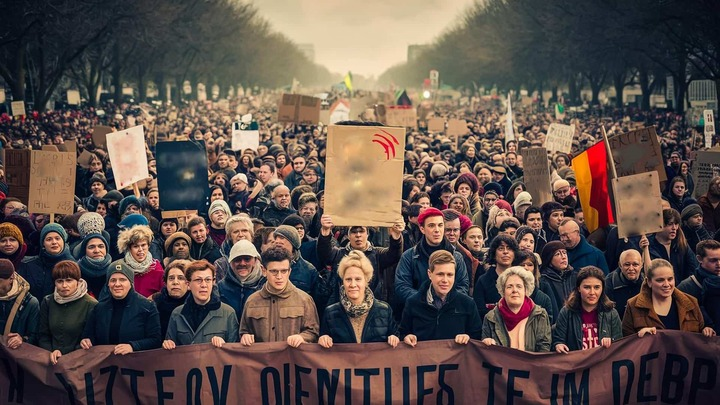
“Rule by the people” is the definition of democracy. It is based on accountability, equality, and voice.
However, under Neo-Feudalism, those values begin to erode.
The voice of the average citizen becomes weaker when a small number of people hold all the authority, whether they are political elites, digital platforms, or business executives.
Because the same interests influence the results behind the scenes, people start to believe that voting doesn’t really alter anything.
Systems that are already owned by the powerful are managed by leaders. As a result, politics becomes a barrier for a select few rather than a platform for the majority.
Political power in such a world shifts from representation to management.
Therefore, democracy does not disappear; rather, it simply becomes a performance, something we discuss but seldom actually feel.
Signs of the Rise of Neo-Feudalism
Signs of this new feudal structure can be found in numerous places:
- Concentration of wealth: The majority of the world’s wealth is owned by a small group.
- Data control: all of the major digital platforms are owned by a few firms.
- Media influence: A small number of firms control the news and culture.
- Political funding: The amount of money determines which candidates or policies endure.
- Social inequality: Economic background has a greater influence on access to housing, healthcare, and education than merit.
Every one of these indicators suggests a more profound reality: contemporary power structures are putting a strain on democracy.
How do people Turn Into “Digital Peasants”?
People frequently become what academics refer to as “digital peasants” in neo-feudal countries.
We no longer farm land as we once did, but we unknowingly “work” for digital platforms by providing our data, time, and attention for nothing.
We add value to these platforms each time we upload, like, or watch something.
They profit, gain power, and sell that data in exchange, all the while keeping us reliant on their services.
It’s a smart system: we reward them for the opportunity to work for free.
This proves how freedom is transformed into silent servitude under neo-feudalism.
Then and Now: Politics as Power
Politics was once used as a strategy to maintain power balance and ensure that kings or other elites did not reign unchallenged.
However, politics itself becomes a component of the power structure in the Neo-Feudal universe.
“Politics as power” refers to the idea that politics is now about preserving power through legislation, media representations, and partnerships with business interests rather than merely resolving public problems.
As a result, citizens become observers instead of participants.
But knowing this helps in our problem-solving.
We can resume our efforts to promote openness and equity once we have a better understanding of the system and neo-feudalism.