For many people today, clinical mental health counseling has become a lifeline; it’s a place to calm down, process emotions, and learn how to live a more peaceful and fulfilling life.
It is like taking a pause for you, as life is becoming too fast and competitive, and we can also say that the rise of social media platforms has also instigated a new layer of mental suffering when people can manage their consumption or regulate their emotions.
However, many people question whether online therapy is as beneficial as in-person clinical mental health counseling now that technology has made treatment accessible from nearly anywhere.
You would not be the only person who has been browsing through therapy apps, uncertain about whether to speak with a counselor in person or virtually. The field of mental health has undergone rapid changes, making it challenging to determine the most effective type of assistance.
Let’s examine both choices to determine what best suits you!
Understanding Clinical Mental Health Counseling

Fundamentally, clinical mental health counseling is an expert, research-based procedure that assists people in developing coping mechanisms, enhancing their emotional health, and leading more balanced, healthy lifestyles.
It’s more than just “talking about feelings”; it’s informed by psychology, neuroscience, and therapeutic approaches meant to support your recovery, development, and well-being.
A Clinical Mental Health Counseling qualified practitioner with training in pattern recognition, emotional block exploration, and the development of constructive transformation techniques.
A clinical mental health counselor assists those who face difficulties such as:
- Mood fluctuations, depression, or anxiety
- Family or relationship problems
- Burnout, stress, or a loss of energy
- Past experiences and trauma
- Identity challenges, self-esteem issues, or life transitions
Consider Clinical Mental Health Counseling as a secure place where self-awareness starts and judgment ends.
A therapist there doesn’t “fix” you; instead, they support you while you figure out how to make things better.
What Is Online Therapy?
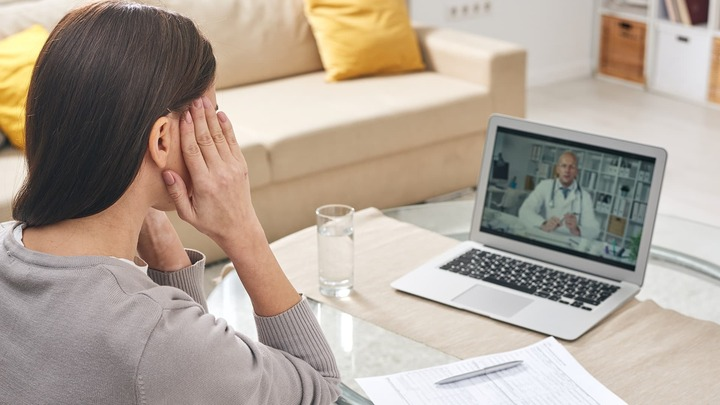
Through video conversations, chats, or phone sessions, you can meet a qualified counselor or therapist through online therapy, often known as teletherapy or virtual counseling. It is often made available through private practices that offer virtual choices or therapeutic apps.
During and after the epidemic, this type of counseling became quite popular because it’s:
Convenient: You can plan sessions from the comfort of your own home, your dorm room, or even over lunch.
Accessible: Excellent for those with mobility issues or those who live far from therapy organizations.
Private: You can speak openly while relaxing in your own surroundings.
These days, there are a lot of platforms that automatically pair you with therapists or enable you to select one based on your interests, goals, or even communication style.
It is a wonderful thing that online therapy has made mental health support more accessible.
Clinical Mental Health Counseling: The Traditional (and Effective) Method

Clinical Mental Health Counseling emphasizes connection and depth, whereas online therapy emphasizes flexibility.
Face-to-face interactions with a counselor involve minor yet significant elements that enhance the therapeutic process, such as body language, energy, eye contact, and quiet.
These simple details often help clients feel more grounded, especially when dealing with trauma, significant sorrow, or emotional regulation concerns.
Additionally, Clinical Mental Health Counseling enables therapists to employ tools such as directed mindfulness exercises, art therapy, and specific body-based treatments that are not well-suited for internet use.
The benefits of Clinical Mental Health Counseling

- Improved nonverbal understanding and stronger emotional connection
- A disciplined setting that encourages concentration
- Regular therapeutic rhythm
- Easy Integration with local support systems (such as group therapy and psychiatrists)
- This arrangement feels more “real” or simpler for some people to commit to.
- The simple act of another human being making room for you can have a profoundly healing effect.
The Growth of Online Counseling: Why Many People Find It Effective
It is impossible to overlook how technology has changed the way mental health care is provided.
Online therapy is an extension of clinical counseling, not a substitute for it.
Today, the majority of internet therapists are themselves certified clinical mental health counselors. The environment makes a difference, not necessarily talent or empathy.
Among the benefits of online therapy are:
Accessibility: Ideal for parents who are unable to travel, working professionals, or students.
Reduced cost: Some systems provide subscription plans or variable pricing.
Comfort: In familiar environments, people tend to open up more quickly.
Flexibility: You can select audio, video, or chat, depending on what feels secure.
In fact, studies have verified that for mild to moderate cases of anxiety and depression, internet therapy can be just as successful as Clinical Mental Health Counseling. Finding a counselor who feels like a good fit and developing consistency are crucial.
Choose what suits you the best
| Feature | Online Therapy | Clinical Mental Health Counseling |
| Convenience | Highly adaptable and available anywhere | requires planning and travel |
| Personal Association | Good, but screen contact limits it. | Greater emotional involvement |
| Suitable For | Busy schedules and mild to moderate anxiety or stress | Trauma, intense emotional labor, and complicated problems |
| Tools Used | Digital exercises, video calls, and messaging | In-room techniques, body language cues, experiential methods |
| Atmosphere | The comfort of home | A dedicated counseling environment free from distractions |
| Efficiency | supported by research for multiple conditions | long-standing gold standard in Therapy |
The aim of both strategies is the same: to support your growth and healing.
Selecting between them is more about what suits your life at the moment than it is about “which is better.
Both are helpful, and it completely depends on what suits your circumstances.
How to know Which One you need?
Here’s a quick way to choose:
- Online therapy could be a fantastic place to start if you’re feeling anxious, overwhelmed, or need someone to help you deal with daily stress.
- Clinical Mental Health Counseling might provide the stability and depth you need if you’re coping with trauma, sorrow, or complicated patterns that call for detailed investigation.
When the time is right, some people switch from online to Clinical Mental Health Counseling as well.
How to find the right Therapist?
When selecting an online or Clinical Mental Health Counseling program, consider:
- Credentials: Seek out certified clinical mental health counselors with the following credentials: LCMHC, LPC, and LMHC.
- Specialties: Some concentrate on trauma, relationships, anxiety, or self-worth.
- Method: Do you favor mindfulness, holistic counseling, or cognitive-behavioral therapy (CBT)?
- Comfort: You should experience respect, safety, and hearing.
To find out if you connect, most counselors provide a free or low-cost consultation.
The relationship you have with your counselor is more important than the platform. Relationships, whether in person or virtually, are where healing takes place.
Nonetheless, it can be frightening to consider counseling, whether Clinical Mental Health Counseling or online, if you have never tried therapy before.
In truth, though, it’s about developing resilience, managing stress, and understanding your emotions in order to be a healthier human.
Starting little is acceptable.
“I’m not sure what I need, but I want to talk” is OK.
Every healing journey starts like that.
Keep in mind that not everyone who needs Clinical Mental Health Counseling is experiencing a crisis. Anyone who wants to live a more true, peaceful, and self-aware life can get it.
Most importantly, you can turn self-doubt into confidence and sorrow into understanding with the support of both clinical mental health counseling and online therapy.
Online therapy might be a good fit for your lifestyle if you value flexibility and convenience.
In-person counseling may be the ideal option if you want for greater emotional presence and organization.
Healing is a two-way process, so it’s okay to try one, reevaluate, and make adjustments if you’re not sure.
Seeking assistance, in any form, is a courageous and transformative choice.
You’re not “too late,” “too busy,” or “too sensitive.” You’re only a human, and people occasionally require guidance, care, and connection.
Therefore, realize that you are already beginning the process of recovery, whether you contact a clinical mental health counseling practitioner or visit an online one.