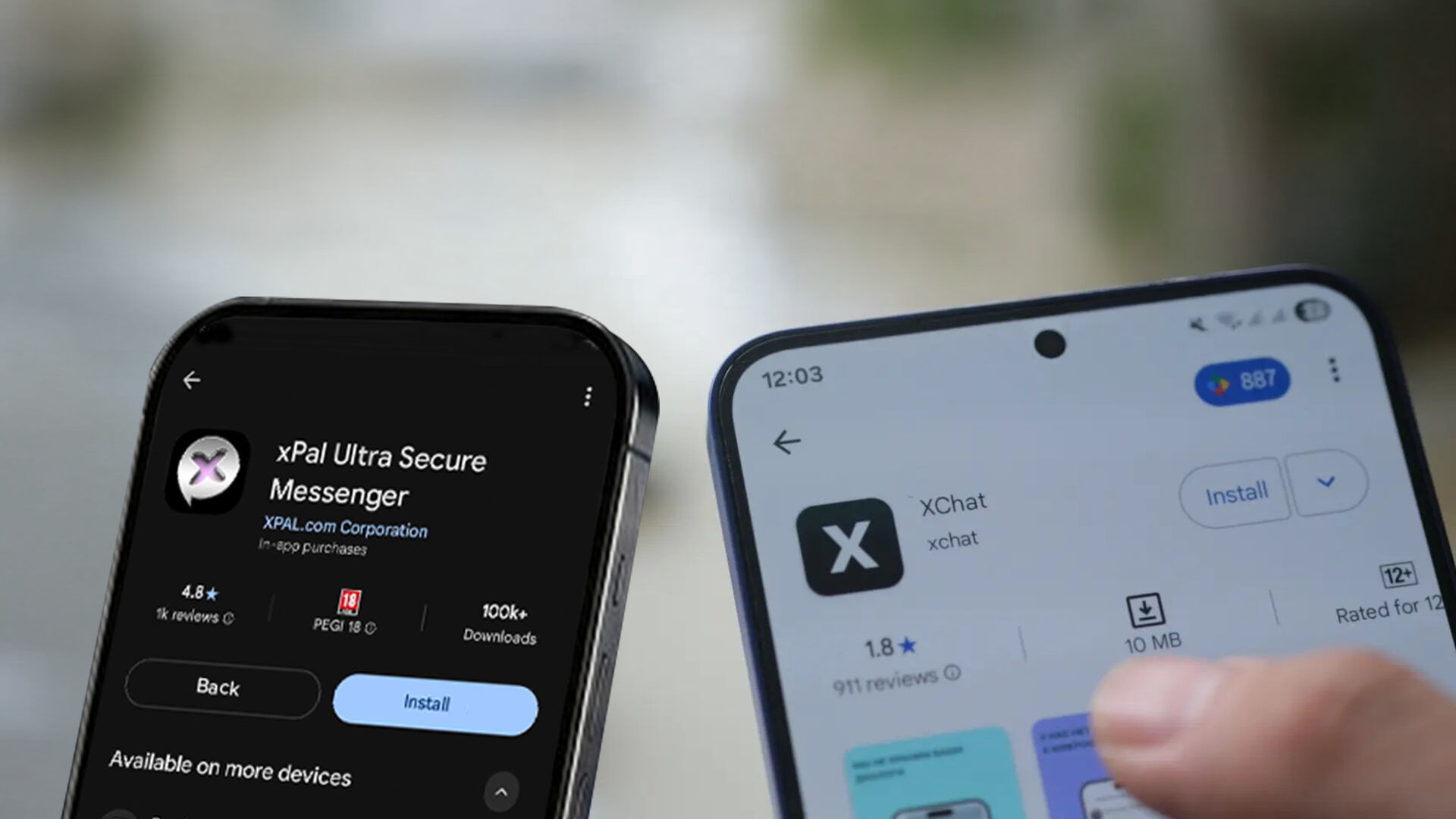
Every few years, something shakes up the encrypted messaging app world. In 2021, a WhatsApp policy update sent millions of users scrambling toward other secure messenger options overnight. In 2024, the arrest of Telegram’s Pavel Durov put encrypted communication back on every front page. Now, in 2026, XChat, the standalone messaging app from Elon Musk’s X Corp, has arrived on iOS, promising: no ads, no tracking, and end-to-end encryption that “not even X” can read.
Still and all, the announcement landed like a headline. And we usually see this pattern: something big comes up with substantial hype; everyone seems to be talking about it; people get their hands on it, and in each of these patterns, nobody thinks twice about it until something bothers them.
The conversations, reviews, and user experiences that usually follow the hype around secure messaging apps are often different and seen as more complicated than the press releases, especially regarding privacy.
Most importantly, this is not a story about which encrypted messaging app is best. This is more inclined towards what aspects users should be considering before surrendering their data and privacy. People are not asking about the certifications and validations behind claims, how their data would be handled, and most importantly, their control over their digital interactions!
Understanding the gap between Marketing claims and Technical reality
Starting from encryption, a term most marketed and mentioned in the realm of anonymous messaging and untraceable text messaging apps.
There is a wide spectrum between “your messages are encrypted in transit” and “your communications are structurally private from everyone, including the platform itself.”
You clearly had seen most mainstream apps live somewhere in the middle, and the marketing language of “end-to-end encrypted,” “no tracking,” “private by design” rarely tells you where on that spectrum you actually sit as a user.
When XChat launched, iOS development team Mysk immediately flagged that its encryption claim was “misleading at best,” pointing to weaknesses in the foundational structure of how keys are handled.
On top of that, security researcher Dr. Matthew Garrett identified a central concern about XChat privacy issues: XChat relies on a low-entropy four-digit PIN to protect private keys stored on X’s own servers, making brute-force attacks feasible under certain conditions.
In layman’s terms, XChat uses a simple four-digit PIN to protect users’ private data on their servers. Because the PIN is so short, it would not be very hard for a hacker to guess every possible combination until they get in.
The weakness is that a 4-digit PIN only has 10,000 possible combinations, and the risk that could come along is that if XChat’s servers don’t strictly limit login attempts, a program could crack the PIN in seconds.
None of this makes XChat useless. For casual conversation among X users who want something more convenient than SMS, it is arguably a step forward. TechCrunch noted that security experts warned that XChat appeared less secure than other encrypted messaging apps when the app was first introduced.
And clearly, a lot of moons have gone by, so those experts will need to evaluate the dedicated app again now that it is broadly available to see if improvements have been made.
What do established market players like xPal, the encrypted messaging app, offer users?
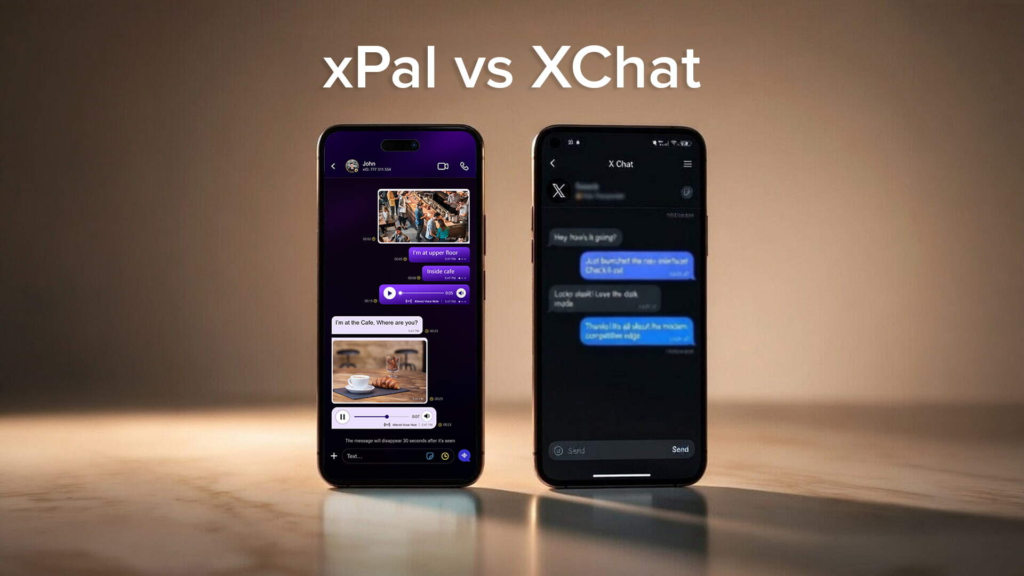
To comprehend the full picture, both in depth and breadth, it is wise to benchmark against the current market landscape, where impressive standards like xPal Messenger already exist.
The bottom line is that when evaluating encrypted messaging platforms, move beyond hype and assess the critical technical pillars.
- Can the company read your messages? (They shouldn’t be able to).
- Do they track who you talk to and when?
- Can you sign up without using your real name, phone number, or any personal identifier?
- Is the app run by one big company, or is it spread out across many servers?
- If you want to be sure an app is safe, look for third-party independent audits and certifications.
This framework is valuable exactly because it cuts through hype, as many secure messaging apps claim encryption, but far fewer can credibly deliver across all technical fronts.
Why do independent Certifications and audits matter?
Here is something that must get attention in mainstream app comparisons: independent security audits.
Far beyond, people don’t have exponentially more knowledge of these technicalities.
If we generally look at the picture, an encrypted messaging app can claim anything it wants. What changes the equation is whether that claim has been independently verified by a credible third-party organization, and not once or under some favorable conditions. But repeatedly, on an ongoing basis.
Most encrypted messaging apps do not submit to annual independent audits, providing no transparency.
XChat has not yet received a thorough outside auditing, and security experts say they would hesitate to recommend it until that process is complete, that address xchat privacy issues.
Nonetheless, there is an untraceable text messaging app that has gone further. xPal messenger, a US-based privacy communications platform that has been operating since 2021, has pursued what may be the most thorough independent certification record in the consumer messaging space.
The company holds DEKRA security certifications for 2023, 2024, and 2025; three consecutive years with one of the world’s most reputable testing organizations. It has also completed NIST Cryptographic Algorithm Validation Program (CAVP) certification, confirming that its underlying cryptographic algorithms AES-256, HMAC-SHA256, SHA-2, and elliptic curve key exchange perform exactly as specified by international standards. Likewise, it holds Google MASA/CASA certification through the App Defence Alliance and is developed in compliance with OWASP secure coding practices. These represent powerhouse positions in the digital privacy sphere.
The links are mentioned on their official website, xPal.com, and can be verified by anyone.
NIST CAVP is a foundational requirement for federal security compliance.
DEKRA is an independent global testing organization.
Why is it important to build security into the system from step one?
If you use an untraceable text messaging app for communication, which is certain in this era, many apps require something to register.
- Signal requires a phone number.
- WhatsApp requires a phone number.
- iMessage is tied to your Apple ID.
- Telegram requires a phone number unless you use a username workaround.
One concern with XChat is that users have to link their existing X account before they can log in and start messaging. That requirement raises xchat privacy issues and questions. As Maria Villegas Bravo, a counsel at the Electronic Privacy Information Center, explains, connecting multiple pieces of personal data can make it easier to track a user’s activity and behavior.
xPal Messenger takes a fundamentally different architectural approach. If we see the registration process, it requires only a username and a PIN. No phone number, no email address, no real name, no SIM card, no social media account.
Users are assigned a unique 9-digit xID, a global communication identifier that works across borders without country or area codes.
Compounding this, the company states it does not collect, store, or require any personal information, and that it retains only the most basic operational data: screen name, xID, registration date, last login timestamp, operating system, and country of use.
How do built-in Privacy features become the backbone of the Platform?
A further consideration is that one of the clearest ways to understand what a platform was actually built for is to look at its privacy-specific feature set.
xPal Messenger includes:
Total Wipeout™: a reverse PIN that instantly erases all message history from the user’s device and every recipient’s device simultaneously.
There is Remote Wipeout™, which allows users to remotely erase all xPal data from a lost or stolen device the moment it connects to the internet.
Terminate™ removes an entire conversation from both devices, deletes the sender’s xID from the recipient’s contact list, and blocks all future contact.
Flicker™ Mode allows disappearing messages set between 5 seconds and 24 hours, on a per-chat basis.
There is also a Decoy PIN, which opens a fake environment filled with dummy data when entered, concealing the real account from anyone who has physical access to the device.
Perhaps most notable from a privacy architecture standpoint is the platform’s Photo and Video Sanitizer™, which strips all metadata, such as GPS coordinates, timestamps, and device identifiers, from every image and video before it is encrypted and transmitted.
XChat, by contrast, has been reported to not strip image metadata, meaning that GPS coordinates and camera details can remain embedded in shared photos even when the message content itself is encrypted.
What it all means is that xPal messenger sits in that narrower category of secure messaging apps, a platform that has spent five years building toward certifications that most messaging apps have never sought, with a feature architecture that reflects what serious privacy protection actually requires in practice.
The encrypted messaging app market has never had more options. But more options with more marketing claims do not automatically mean more privacy.
If you had to choose, would you go with the hype or the real privacy technicalities?